Welcome to the Anne Frank Museum
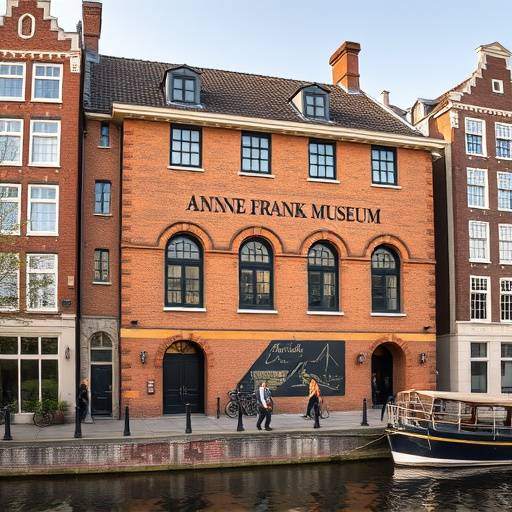
The Anne Frank Museum, located in the heart of Amsterdam, is dedicated to preserving the memory of Anne Frank and her family, as well as promoting awareness of the dangers of discrimination, racism, and antisemitism. Our mission is to inspire visitors to reflect on the Holocaust, to consider the importance of human rights, and to take responsibility for creating a more just and equitable world. We strive to be a place of learning, reflection, and remembrance.
The museum is housed in the building where Anne Frank and her family, along with four other Jewish people, hid from the Nazis for over two years during World War II. The Secret Annex, meticulously preserved, offers a poignant and deeply moving glimpse into their lives in hiding.
Join us in our mission to remember the past and shape a better future. Explore our exhibitions, participate in our educational programs, and learn more about Anne Frank's enduring legacy.
The Story of Anne Frank
Annelies Marie "Anne" Frank was born on June 12, 1929, in Frankfurt, Germany. Her family, fearing the rise of Nazism, moved to Amsterdam in 1933. However, with the German occupation of the Netherlands in 1940, their lives were increasingly restricted. In July 1942, Anne's sister Margot received a call-up notice to report to a labor camp. To avoid this fate, the Frank family went into hiding in the Secret Annex of her father's business premises on Prinsengracht 263.
During their time in hiding, Anne kept a diary, documenting her experiences, thoughts, and feelings. Her diary provides a unique and powerful insight into the lives of those persecuted during the Holocaust and has become one of the most widely read books in the world.
Sadly, the Secret Annex was betrayed in August 1944, and the residents were arrested and deported to concentration camps. Anne and Margot died of typhus in Bergen-Belsen in early 1945, just weeks before the camp was liberated. Only Otto Frank, Anne's father, survived the war. After the war, he returned to Amsterdam and, with the help of Miep Gies and other helpers, recovered Anne's diary and had it published.
"I don't think of all the misery, but of the beauty that still remains." - Anne Frank
The Secret Annex
The Secret Annex, also known as the Achterhuis, was located behind a bookcase in the back of Otto Frank's business. It provided shelter for the Frank family, the van Pels family (Hermann, Auguste, and Peter), and Fritz Pfeffer, a dentist. The cramped quarters, constant fear of discovery, and limited resources made life in the Secret Annex extremely challenging.
Today, the Secret Annex has been carefully preserved to reflect the conditions in which the residents lived. Visitors can walk through the rooms, see the original furniture, and imagine what life was like for those in hiding. The museum also features exhibits that provide historical context and information about the individuals who risked their lives to help the Frank family.
Visiting the Secret Annex is a deeply moving and unforgettable experience, reminding us of the importance of courage, resilience, and hope in the face of adversity.
Museum Exhibitions
The Anne Frank Museum offers a range of exhibitions that explore various aspects of Anne Frank's life, the Holocaust, and related themes. These exhibitions provide a comprehensive understanding of the historical context and the enduring relevance of Anne Frank's story.
Permanent Exhibitions
- Anne Frank's Story: A chronological overview of Anne Frank's life, from her birth in Germany to her death in Bergen-Belsen.
- The Secret Annex: A tour of the meticulously preserved rooms where Anne Frank and her family hid.
- The Holocaust: An examination of the history and impact of the Holocaust, including the persecution of Jews and other minority groups.
- Contemporary Issues: Exhibits addressing contemporary issues such as discrimination, racism, antisemitism, and human rights.
Temporary Exhibitions
The museum also hosts temporary exhibitions that focus on specific aspects of Anne Frank's story or related themes. These exhibitions are regularly updated to provide new perspectives and insights.
For the current and upcoming temporary exhibitions, please visit our Exhibitions page.
Educational Programs
The Anne Frank Museum is committed to educating future generations about the Holocaust and the importance of tolerance, respect, and human rights. We offer a variety of educational programs for students, teachers, and the general public.
Workshops and Guided Tours
We provide interactive workshops and guided tours that engage participants in critical thinking and discussion. These programs are designed to promote empathy and understanding and to encourage individuals to take action against injustice.
Online Resources
Our website offers a wealth of online resources, including educational materials, videos, and primary source documents. These resources are available to anyone who wants to learn more about Anne Frank, the Holocaust, and related topics. Teachers can download lesson plans and activities to use in their classrooms.
Teacher Training
We offer professional development opportunities for teachers to enhance their knowledge and skills in teaching about the Holocaust and related themes. These training programs provide teachers with the tools and resources they need to engage their students in meaningful and impactful learning experiences. Dr. Eleanor Vance leads our teacher training programs with over 20 years of experience.
For more information about our educational programs, please visit our Education page.