The History of Anne Frank and the Secret Annex
This page delves into the comprehensive history surrounding Anne Frank, her family, the events of the Holocaust, and the circumstances that led to their hiding in the Secret Annex. We aim to provide a detailed understanding through timelines, historical documents, and personal accounts.

The Frank Family: Origins and Early Life
The Frank family's story begins in Frankfurt, Germany. Otto Frank, Anne's father, was a decorated World War I veteran and a businessman. In 1925, he married Edith Holländer. Their first daughter, Margot, was born in 1926, followed by Anne in 1929. As the Nazi Party rose to power and anti-Semitism intensified, the Franks, like many Jewish families, faced increasing discrimination and persecution. Otto Frank made the difficult decision to move his family to Amsterdam, Netherlands, in 1933, seeking refuge from the growing threat.

Life in Amsterdam and the Growing Threat
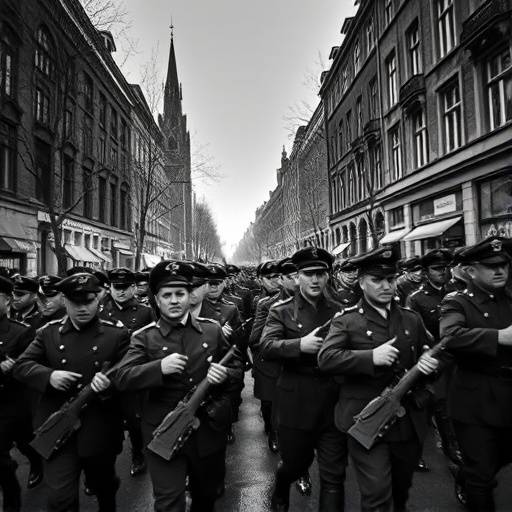
In Amsterdam, Otto established a business dealing in pectin and spices, providing a relatively stable life for his family. However, the sense of security was shattered in May 1940 when Nazi Germany invaded and occupied the Netherlands. The situation for Jewish people in the Netherlands rapidly deteriorated. Anti-Jewish decrees were implemented, restricting their freedom, forcing them to register, and confiscating their businesses. Anne and Margot were forced to attend a separate Jewish school.
The Decision to Go into Hiding
As the threat of deportation to concentration camps loomed larger, Otto and Edith Frank began to plan their escape. The decision to go into hiding was solidified when Margot received a call-up notice to report for forced labor in July 1942. This triggered the family's immediate move into the Secret Annex, a concealed apartment behind Otto's business premises at Prinsengracht 263. They were joined by Hermann van Pels, his wife Auguste, and their son Peter, and later by Fritz Pfeffer, a dentist.
Life in the Secret Annex
For over two years, the eight people lived in cramped and confined conditions, relying on the help of trusted employees like Miep Gies, Victor Kugler, Johannes Kleiman, and Bep Voskuijl, who risked their lives to provide them with food, supplies, and news from the outside world. Anne documented their experiences, thoughts, and feelings in her diary, providing a unique and poignant account of life in hiding during the Holocaust. The diary reveals Anne's intellectual curiosity, her struggles with adolescence, and her unwavering belief in humanity despite the horrific circumstances.
"I don't think of all the misery, but of the beauty that still remains." - Anne Frank, The Diary of a Young Girl
The Discovery and Arrest
On August 4, 1944, the Secret Annex was raided by the Gestapo, likely betrayed by an informant whose identity remains unknown to this day. The eight occupants were arrested and taken to Westerbork, a transit camp in the Netherlands, before being deported to Auschwitz-Birkenau, a Nazi extermination camp in Poland. The helpers were also arrested, although some were later released.
Auschwitz and Bergen-Belsen
Upon arrival at Auschwitz, the Frank family was separated. Otto was sent to the men's camp, while Edith, Margot, and Anne were sent to the women's camp. In late October 1944, Anne and Margot were transferred to Bergen-Belsen, a concentration camp in Germany, where conditions were appalling. They succumbed to typhus in February 1945, just weeks before the camp was liberated by British troops. Edith Frank died in Auschwitz in January 1945. Only Otto Frank survived the concentration camps. Of the other occupants of the Secret Annex, only Otto, Hermann van Pels, and Peter van Pels survived the war. Auguste van Pels died during transport or shortly after arriving at Theresienstadt, and Fritz Pfeffer died in Neuengamme.
The Diary's Legacy
After the war, Miep Gies retrieved Anne's diary from the Secret Annex and gave it to Otto Frank. Otto painstakingly transcribed the diary and sought to have it published. Het Achterhuis (The Secret Annex) was first published in Dutch in 1947, and subsequently translated into numerous languages, becoming one of the most widely read and influential books in the world. Anne Frank's diary has become a powerful symbol of the Holocaust and a testament to the resilience of the human spirit in the face of unimaginable adversity. The Anne Frank House, established in 1960, preserves the Secret Annex as a museum and educational center, dedicated to keeping Anne Frank's memory alive and promoting tolerance and understanding.
Timeline of Anne Frank's Life
- 1929, June 12: Annelies Marie Frank (Anne Frank) is born in Frankfurt, Germany, to Otto and Edith Frank.
- 1933: The Frank family flees Nazi Germany and moves to Amsterdam, Netherlands.
- 1940, May: Nazi Germany invades and occupies the Netherlands.
- 1942, June 12: Anne receives a diary for her thirteenth birthday.
- 1942, July 6: The Frank family goes into hiding in the Secret Annex behind Otto Frank's business premises at Prinsengracht 263 in Amsterdam.
- 1942-1944: Anne chronicles her experiences in the Secret Annex in her diary.
- 1944, August 4: The Secret Annex is raided by the Gestapo, and the occupants are arrested.
- 1944, September: The Frank family is deported to Auschwitz-Birkenau concentration camp.
- 1944, October: Anne and Margot are transferred to Bergen-Belsen concentration camp.
- 1945, February: Anne and Margot Frank die of typhus in Bergen-Belsen, shortly before the camp is liberated.
- 1945, January: Edith Frank dies in Auschwitz.
- 1945, May 7: Otto Frank survives and is liberated from Auschwitz.
- 1947: "Het Achterhuis" (The Diary of a Young Girl) is first published in Dutch.
- 1960: The Anne Frank House museum opens in Amsterdam.
Memorials and Legacy
The Anne Frank Museum continues its work educating the world about the dangers of discrimination and prejudice. Countless books and films document Anne's life and the horrors of the Holocaust, serving as a stark reminder of the consequences of intolerance. Several memorials around the world honor Anne Frank and the victims of the Holocaust, ensuring that their stories are never forgotten.